Keeping Malaysia’s heritage alive through hosting
Keeping Malaysia’s heritage alive through hosting
Azmir | Rumah Uda, Langkawi
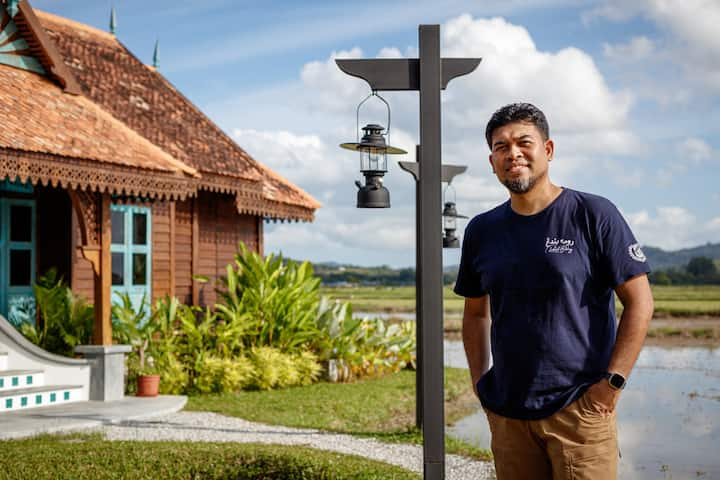
Propped in the middle of Langkawi’s paddy fields at the foot of Mount Raya, Rumah Uda stands as a living example of traditional Malay architecture. For host and builder, Azmir, embedding heritage and culture into the house itself ensures that Malay culture can not only be preserved, but also experienced in day-to-day life.
Preserving Malay identity through lived experience
Preserving Malay identity through lived experience

Rumah Uda was built using reclaimed timber from an old home in nearby Kampung Tok Senik. Each beam was dismantled piece by piece and brought here to be reassembled with traditional carpentry techniques. The layout, ventilation, and raised form reflect how Malay houses were adapted to climate, family life, and community connection.
For Azmir, heritage should be lived and not just something you showcase in a museum. He wants visitors and travellers to feel what it means to wake up to the roosters' calls, feel the gentle breeze across the paddy fields, and experience how a local home like this breathes with the landscape.


I believe culture should be lived day-to-day, not just displayed behind the glass. That’s why I designed Rumah Uda: so guests can actually feel what it’s like to live in a traditional Malay setting; like waking up to the sound of roosters, seeing Mount Raya in the background, watching the paddy fields change. That is how I hope to preserve and pass down our identity.
Tourism that keeps local knowledge and livelihoods alive
Tourism that keeps local knowledge and livelihoods alive
Guests who stay at Rumah Uda are introduced to the people and places that shape Langkawi’s identity. The morning market in Padang Matsirat, local kuih vendors, woodcarvers, and artisans around Mahsuri’s Tomb who are all part of the island’s cultural fabric.When guests choose to stay in a heritage home, they support the continuation of skills that are at risk of fading, including traditional joinery, hand-carving, and Malay culinary practices.This helps to strengthen meaningful participation in tourism.
Guests who stay at Rumah Uda are introduced to the people and places that shape Langkawi’s identity.The morning market in Padang Matsirat, local kuih vendors, woodcarvers, and artisans around Mahsuri’s Tomb who are all part of the island’s cultural fabric.When guests choose to stay in a heritage home, they support the continuation of skills that are at risk of fading, including traditional joinery, hand-carving, and Malay culinary practices.This helps to strengthen meaningful participation in tourism.
I always encourage guests to visit the morning market in Padang Matsirat. That is where you really feel the morning vibes of Langkawi through the eyes of the locals. Supporting places like that helps keep our island’s soul and small businesses alive.


What is preserved today is what the next generation will inherit
What is preserved today is what the next generation will inherit
Azmir believes that hosting is the main driving force that allows Rumah Uda to exist and for heritage houses to remain relevant. From his perspective, without guests, it becomes harder to maintain and sustain traditional homes, artisans, and the knowledge that comes with them.
Hosting for me means telling people who we are and what we represent. I want guests to experience our hospitality, our warmth, and our culture. That is why Rumah Uda was created; so people can slow down, reconnect with nature, and feel the beauty of Malaysian village life.Hosting has become part of my identity. It allows me to share my culture and support local communities while maintaining heritage properties like Rumah Uda. If that opportunity is taken away, it would affect not only my livelihood but also the opportunity to keep our traditions alive through living spaces that tell our story.
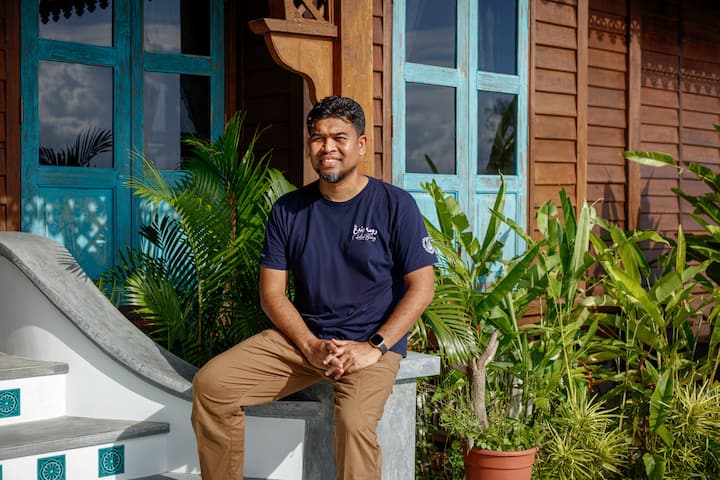
Rumah Uda reflects a broader Malaysian effort to preserve cultural identity through community-based tourism and living heritage. In Langkawi, Azmir shows how tradition endures not by being protected from the world, but by being shared with it.


